Instagram gives you exactly one clickable link on your profile. One. Meanwhile you have a shop, a new video, a newsletter, and a booking page — all of which need to be reachable from the same tiny field.Here's how to add that link, how to get around the one-link limit properly, and how to find out whether anyone is actually clicking it.
A recommendation from a friend beats any advertisement you can buy. The problem has never been that people won't recommend you — it's that when they do, you have no idea it happened, and no way to thank them for it.That's the job of a referral link: it makes word of mouth countable.
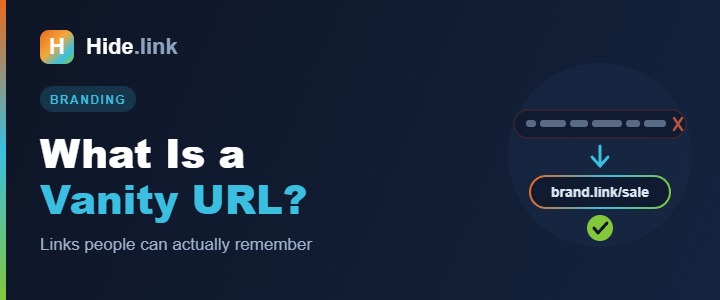
Try reading this out loud on a podcast: example.com/events/2026/q3/registration?id=8842&src=epNow try this: example.com/signupThat's a vanity URL. It's not a technical trick — it's a link written for humans instead of databases, and the difference shows up every time someone has to remember, type, or say it.
You printed 2,000 flyers with a QR code. Three weeks later someone asks how it went, and the honest answer is a shrug. Did anyone scan it? Which location worked? Did the scans turn into anything?With a static QR code, you'll never know. With a trackable one, you'd have had the answer in real time — and the difference is a setting you choose before you print, not after.
Shortening links by hand is fine for ten links. At a thousand — every product in a catalogue, every user's referral link, every order confirmation — it stops being fine and starts being someone's whole afternoon, every week. That's what an API is for. Your system asks for a short link, gets one back in milliseconds, and nobody opens a dashboard.
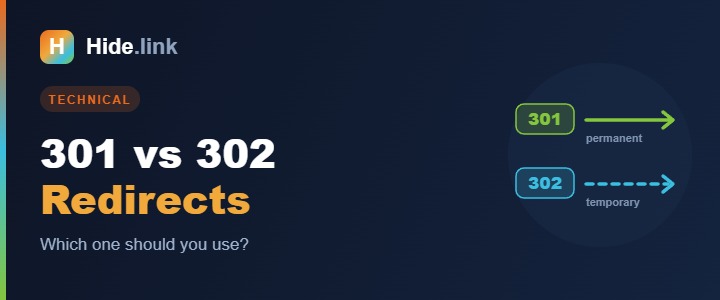
Most people pick a redirect type by accident. Their plugin defaults to one, they never look, and it works — until the day a page they moved never recovers its rankings and nobody can explain why. The difference between a 301 and a 302 is one word: permanent versus temporary. What that word changes is worth understanding, because it takes thirty seconds to get right and months to recover from getting wrong.