A recommendation from a friend beats any advertisement you can buy. The problem has never been that people won't recommend you — it's that when they do, you have no idea it happened, and no way to thank them for it.
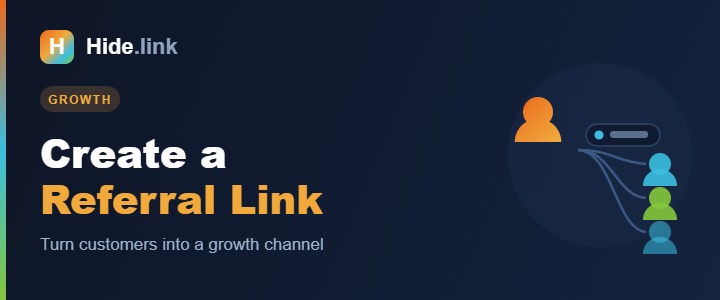
That's the job of a referral link: it makes word of mouth countable.
What a referral link actually is
It's a normal link to your site with something extra attached that identifies who shared it. When someone arrives through it, you know which person sent them.
Two common forms:
- A parameter:
yoursite.com/signup?ref=dana - A short link:
yourbrand.link/dana— cleaner, and far more likely to actually get shared
The second wins in practice. A link with a query string looks technical and gets mangled when pasted into messaging apps. A clean short link looks like a recommendation.
Creating one — the simple way
For a handful of partners, affiliates or loyal customers, you don't need software:
- Decide your destination — usually a signup or landing page.
- Add a parameter that identifies the referrer:
?ref=dana. Whatever you use, keep it consistent. - Shorten that URL with a memorable alias in Hide.link:
hide.link/dana. - Send it to them with a short note on where to share it.
- Watch the clicks in your dashboard and match signups against the parameter in your analytics.
Ten minutes, no development work. This is enough for most small businesses to start.
Creating them automatically — at scale
Once every customer needs their own link, generate them in code. When a user signs up, your system calls a shortener's API, creates their personal link, and shows it on their dashboard.
This is one of the most common uses of a URL shortener API, and it's usually a small amount of work — see shortening links automatically with an API. The pattern is: create the link on signup, store the ID against the user, display it in their account.
What to actually track
Clicks alone will flatter you. The numbers that matter:
- Clicks per referrer — who is genuinely sharing
- Signups per referrer — who is sharing with the right people
- Conversion rate — a link with 40 clicks and 12 signups is worth more than one with 400 clicks and 3
- Retention of referred users — referred customers usually stay longer than paid-acquisition ones. Check whether that's true for you; if it is, it justifies spending more on the programme
Designing the reward
The structure matters more than the amount.
- Two-sided rewards work best. "Give a month, get a month" gives the sharer a reason that isn't purely self-interested — it feels like a gift rather than a sales pitch.
- Make it instantly understandable. If explaining the reward takes two sentences, it's too complicated.
- Pay out fast. Delayed rewards kill enthusiasm more than small rewards do.
- Account credit beats cash for most products — cheaper for you, and it keeps them using the product.
The traps
- Hiding the link. If people have to hunt for their referral link, they won't share it. Put it on the dashboard.
- Not telling anyone the programme exists. The most common failure by far. Mention it in onboarding emails, in the app, and in your footer.
- No fraud check. Self-referrals and fake accounts appear the moment there's money involved. Validate emails and watch for patterns.
- Ugly links. A 90-character URL with three parameters doesn't get shared. Shorten it.
- Asking too early. Ask after someone has had a good experience, not on day one.
Where to ask
Timing does more work than wording. The best moments are right after something went well — a completed purchase, a positive support interaction, a milestone reached in the product. That's when someone actually feels like recommending you, and a one-line prompt with their link is all it takes.
The bottom line
Referral links don't create word of mouth. They make the word of mouth you already have visible, trackable, and worth rewarding — which is what turns it from luck into a channel.
Start with one clean short link for your best customer this week. Create a free Hide.link account and see who's really sending people your way.
Related reading: How to cloak and track affiliate links · Shorten links automatically with an API